The archive that knows everything
Most learning and training systems are built as a system of record. They precisely record what happened: enrolments, attendance, test results and certificates. That is valuable. Without reliable records you cannot prove anything in an audit, and nobody knows who is authorised.
But a system of record is passive. It knows a technician's certificate expires in six weeks, but it does nothing with that. Someone has to run a report, export a list, send an email and find a suitable session. The knowledge sits in the system; the action sits in people.
Where it goes wrong
As long as that one planner keeps everything in their head, it usually works. Until they go on holiday, change jobs or simply miss one signal among a hundred others. Then, on the morning of a job, an authorisation turns out to have expired. The technician cannot work, the schedule slips and the customer waits.
The problem is not that the information was missing. It was right there in the system. The problem is that nobody acted on it in time.
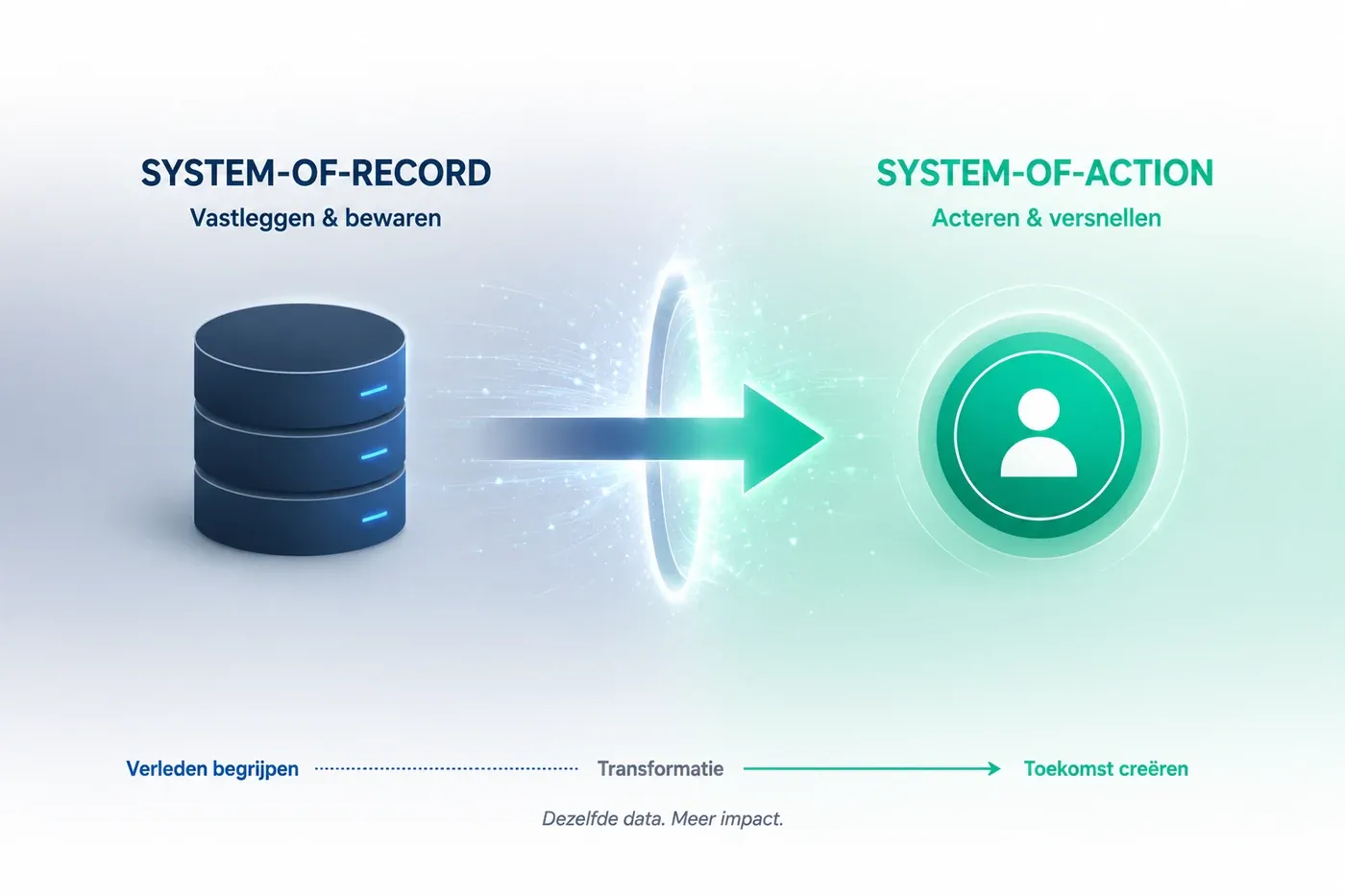
What a system of action does differently
A system of action stands on the same foundation of reliable data, but translates that data into a next step. It does not wait for someone to open a report. It alerts, proposes and sets things in motion.
“Your LV joints recertification expires in six weeks. Shall I enrol you in Zwolle on 12 March?”
That one message replaces a report, an export, three emails and a search through the schedule. Not because the system is smarter than the planner, but because it takes the routine off their hands. That leaves the planner time for the exceptions that do need their attention.
System of record
- Records what happened
- Reports on request
- People search and schedule
- Prove afterwards
System of action
- Flags what is about to happen
- Makes a proposal itself
- Schedules, people confirm
- Prevent beforehand
What it takes
You do not build a system of action by putting an AI layer on top of an existing archive. There are four conditions.
- One source of truth. Training, scheduling and tracking must share the same users, results and certificates. If the schedule lives in a different system from the certificates, nothing can react to anything automatically.
- Rules per certificate. How long is something valid, and which course belongs to the recertification? Only once that is recorded can a system know what the next step is.
- Integrations. An action does not stop at the learning platform. Through an API and webhooks, results flow back to the HR suite, a session appears in the calendar and the manager is notified.
- People stay in control. The system proposes; the employee, planner or trainer decides. AI supports people, not the other way round.
Where Emmedy stands
The foundation is in place. In Emmedy, Learn, Plan and Flow share the same data. Certificates have a validity and a follow-up course, expiring results come into view and flow into the waiting list in scheduling. Through the API gateway and webhooks, results go to other systems.
We are building the next step now: proactive suggestions in the app, and Emmy, a study coach that thinks along and helps practise before an exam. Always with the same idea: the system does the groundwork, people decide.
Recording remains important. But the real value lies in what you do with that data, and above all: in time.